Elementary School (Kinder – 5th Grade)

Elementary at YPW

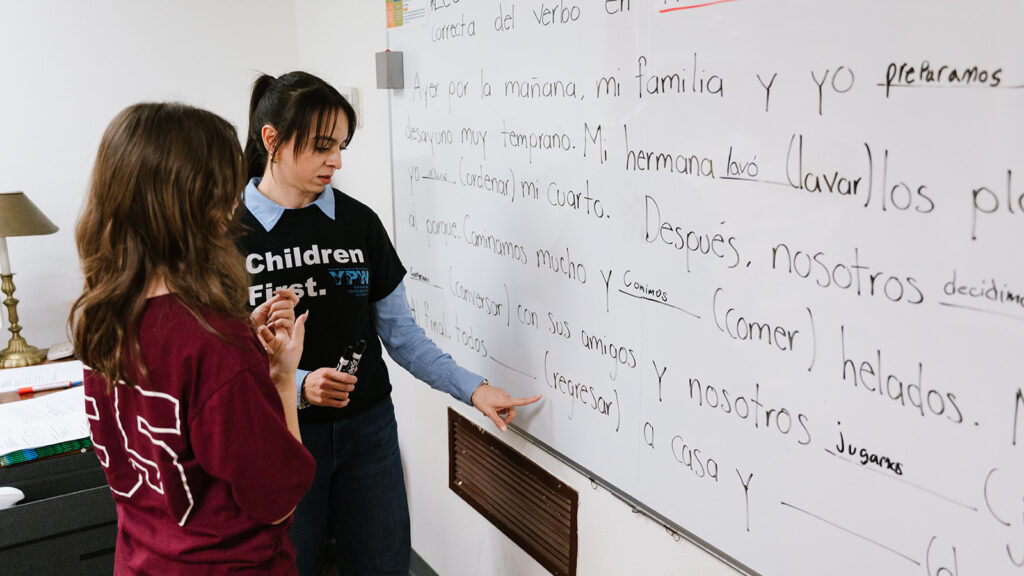
At our YPW Redbud campus, Our students engage in a transformative academic experience within an immersive Spanish-language setting. We dedicate approximately 50-90% of the day to Spanish-language instruction, while the remaining time is focused on English. This dual-language approach ensures our students develop advanced biliteracy, gaining the ability to read and write proficiently in both languages from an early age.

Program Snapshot

   Immersion Model

 ~90% Spanish in K–1, increasing English yearly to 50/50 by Grade 5.

 Literacy, Math, STEAM, Music & Movement, SEL.

Personal attention + nurturing teachers.

Homework help, enrichment, outdoor play

Why Families Choose K-5

Kindergarten: Confidence in Two Languages

 Kindergarten at YPW blends joyful exploration with intentional instruction. With ~90% Spanish immersion, children build strong early literacy, math sense, and social-emotional skills through hands-on projects, music and movement, and outdoor play.

What We Learn
Bilingual Literacy

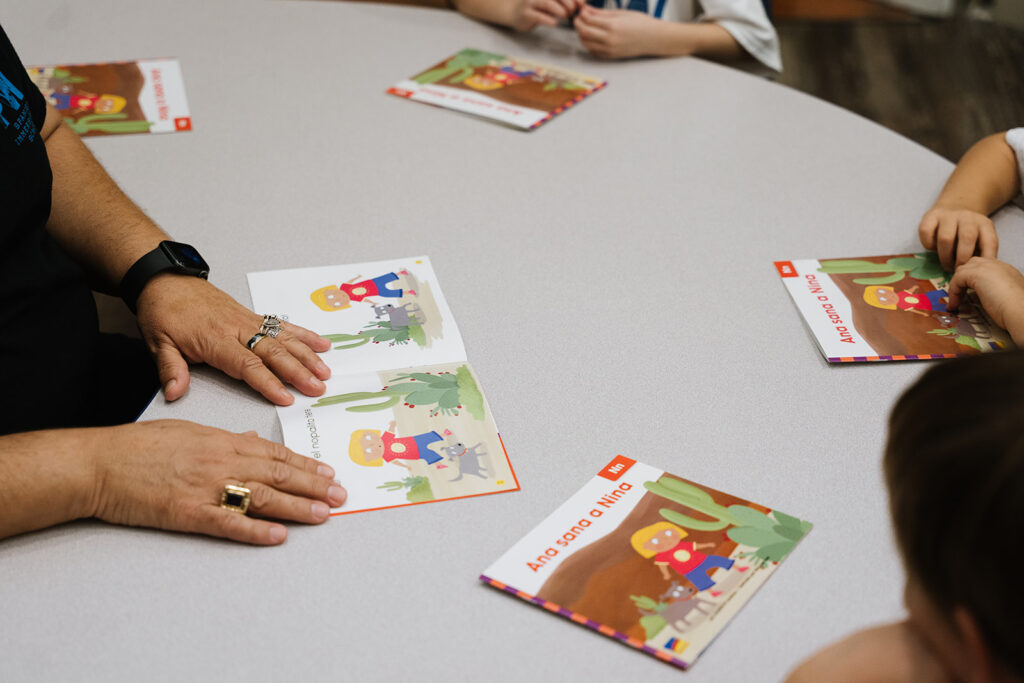
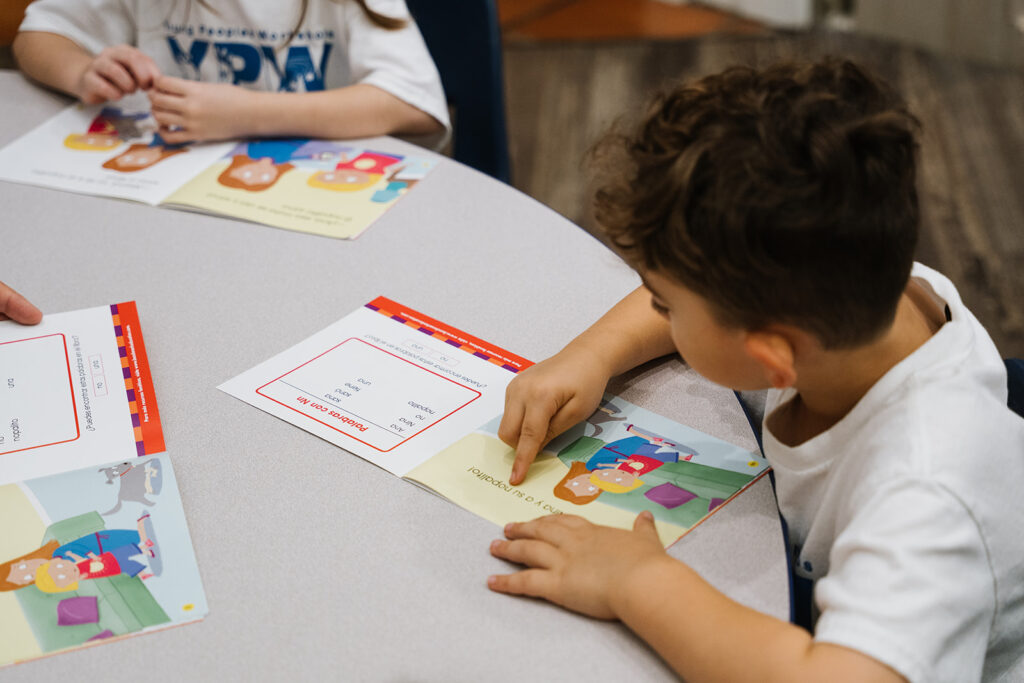
Phonological awareness, emergent reading/writing, storytelling.

Number sense, patterns, shapes, early addition/subtraction.

Observe, test, build—science notebooks, simple design challenges.

Rhythm, coordination, shared performances.

Daily Rhythm

Morning Meeting & Spanish Language Warm-Up

Literacy Workshop (centers + guided groups)

Math Workshop (hands-on games)

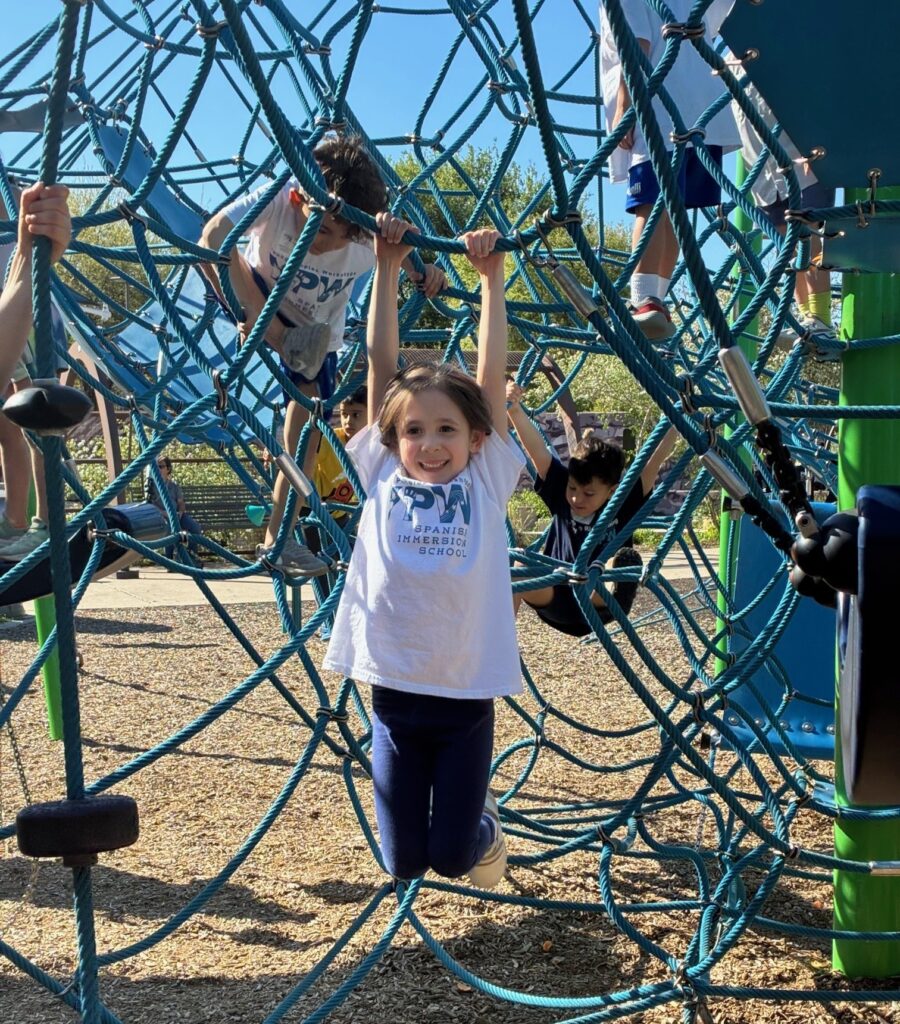
Recess/Outdoor Learning

STEAM/Art/Music Blocks

Reflection & Family Connection

Immersion Model Callout: 90% Spanish 10% English

1st Grade: Reading to Learn, Learning to Lead

 In 1st grade, students deepen reading and writing, extend math fluency, and apply inquiry skills across projects—all while continuing high Spanish immersion and adding strategic English literacy.

What We Learn
Bilingual Literacy

Decoding/encoding, reading fluency, paragraph writing.

Place value, addition/subtraction strategies, time & measurement.

Simple machines, habitats, coding & robotics basics.

Ensemble work, rhythm patterns, creative dance.

Collaboration, growth mindset, conflict resolution.

Immersion Model Callout: 90% Spanish 10% English

2nd Grade – Learning to Apply Skills

In 2nd grade, students continue strengthening reading, writing, and math skills while becoming more independent learners. They begin applying what they know to new situations and real-world examples.
What We Learn

Reading comprehension, fluency, and expanded vocabulary

Writing complete paragraphs with clear ideas

Addition and subtraction with larger numbers, introduction to multiplication concepts

Hands-on science and social studies explorations

Continued bilingual development through daily Spanish and English practice

Immersion Model Callout:
80% Spanish 20% English

3rd Grade – Building Strong Foundations

3rd grade is a year of growth as students deepen their academic skills and learn to think critically. They gain confidence as readers, writers, and problem-solvers.
What We Learn

Reading for meaning, identifying key ideas, and comparing texts

Writing longer pieces with details, organization, and proper grammar

Multiplication, division, fractions, and multi-step problem-solving

Science investigations and broader social studies concepts

Daily opportunities to use and strengthen both Spanish and English

Immersion Model Callout:
70% Spanish 30% English

4th Grade – Growing Independence

 Students in 4th grade take on more responsibility for their learning. They explore more complex concepts, work in teams, and express their ideas confidently in two languages.

What We Learn

Reading to analyze, infer, and understand deeper themes

Writing essays, reports, and opinion pieces

Advanced math including multi-digit operations and fractions

Hands-on science projects and expanded social studies

Increased Spanish and English fluency through academic discussions

Immersion Model Callout:
60% Spanish 40% English

5th Grade – Preparing for Middle School

5th grade students build strong academic, social, and bilingual skills that prepare them for a successful transition into middle school. They learn to think deeper, explain their ideas, and work independently.
What We Learn

Reading complex texts and using evidence in responses

Writing multi-paragraph essays and research-based work

Advanced math: decimals, fractions, volume, and problem-solving

Science experiments and in-depth social studies topics

Confident communication in both Spanish and English across subjects

Immersion Model Callout:
50% Spanish 50% English

How We Teach

Our Elementary Approach

We prioritize critical thinking, inquiry, and collaboration. Children question, analyze, and connect ideas across subjects—rather than memorize facts—so they build real understanding and confidence.

   Biliteracy

(Spanish + English)

(manipulatives → mastery)

(design cycle, coding, robotics)

 (the 5 values in action)

(music, performance, creative expression)

Elementary School – Kindergarten to 5th Grade

In elementary grades we start at 90% immersion in kindergarten, teaching all subjects primarily in Spanish so our students become biliterate while developing the mental flexibility and enhanced cognitive ability that increases their proficiency.

As they progress through the grades, English instruction increases incrementally, and students become equally comfortable and proficient in either language.

We are able to accept students for entry in the elementary years without prior background in the language. Students are able to successfully transition to an immersion program with supplemental support.

inspiration (1)
In the early grades (kindergarten and first grade), a higher percentage of instruction is in Spanish (e.g., 90% Spanish and 10% English), gradually increasing English instruction each year until reaching a 50/50 balance by 5th grade.
translate-2
We develop and nourish a love of reading through Language Arts classes in English, and Spanish. During these early years, we use the Heggerty and Benchmark curriculum, which is a multisensory, structured phonics-based, language arts instruction program. We also teach a literacy program that is aligned to the Texas Common Core Standards balancing work in narrative, informational and persuasive texts. Students develop explicit skills in reading comprehension, word analysis, and writing mechanics. All skills, including listening, speaking, reading and writing. are developed in the target language.
calculating-1
YPW elementary students use Bridges in Mathematics – a proven program focusing on problem-solving and learning the language of math. Bridges in Mathematics provides students with a flexible understanding of math concepts developed through a sequence that uses concrete manipulatives, pictorial representations, and then abstract representations. This sequence helps students acquire a deep understanding of mathematical concepts. At YPW, students are challenged to understand the “why” and “how” of number manipulation in addition to learning procedures and computations when problem-solving. Frequent group work allows students to understand the importance of discourse, collaboration, and diverse methods of solving problems.
innovation (1)
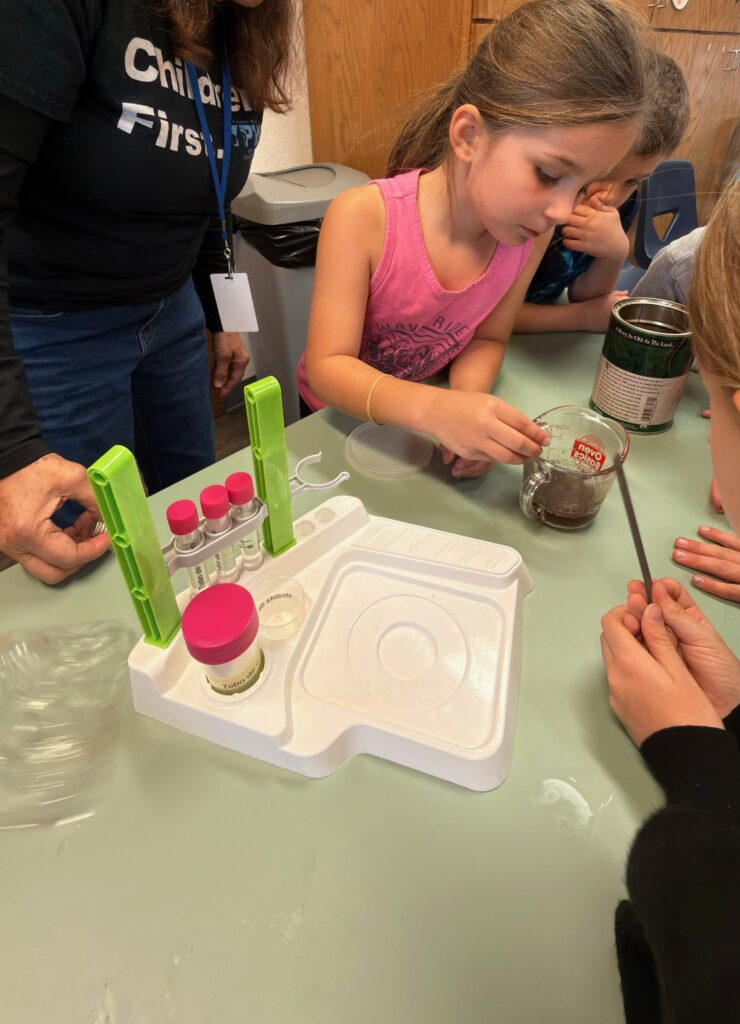
The YPW science program includes experiments, predictions, and hands-on learning experiences that cultivate a curiosity for science. We use the FOSS Next Generation curriculum as a launching point for our units. While scientific concepts and skills are integrated into the units of study, we also use supplementary resources to enrich the learning experiences of our students in science. Specific units of study include life, physical, earth science and science, technology, engineering and math (STEM).
geography (1)
Social Studies provides the context for cultural awareness and civic participation. Our teachers provide authentic knowledge and cultural understanding that helps students broaden their perspective of the world. Children learn about values, families and communities. They understand the power of symbols and the passage of time. Many of our students have stories of migration to share. Students begin to understand economic forces and vocabulary, individual rights and responsibilities, and the causes and effects of conflict.
cardio (1)
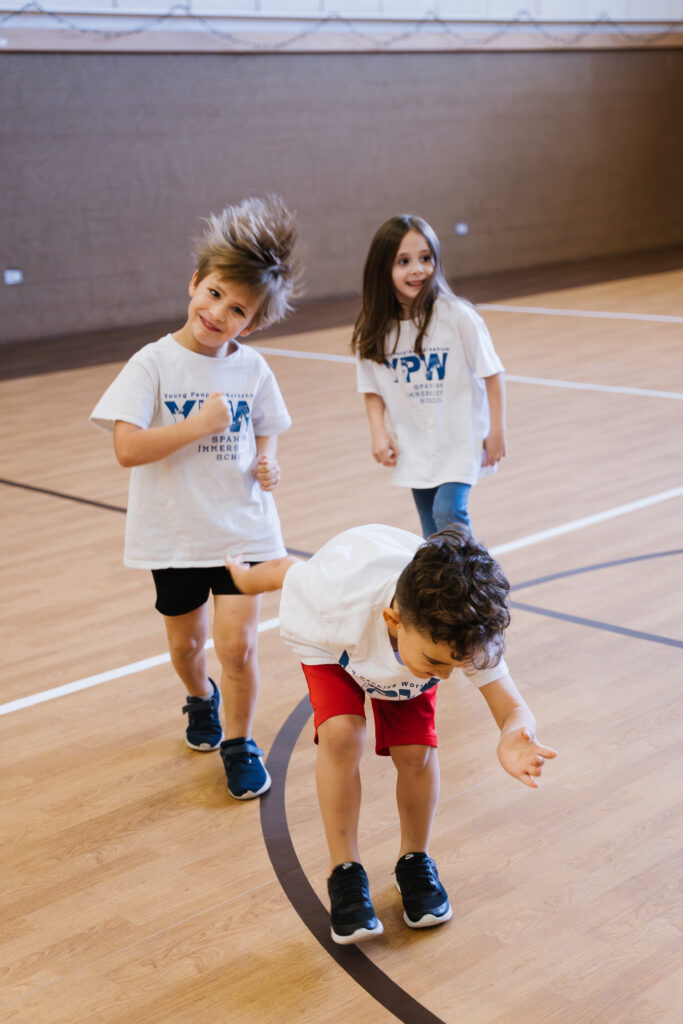
The elementary PE program teaches team and individual sports through a building-blocks approach in which students practice sport-specific movements and drills to develop competency and instill confidence. Difficulty and intensity progress by grade level and ability level of the cumulative group. Program priorities include promoting team building and group solving skills, building confidence and self-esteem, fostering characteristics of good sportsmanship and teamsmanship, and explaining how rules and proper techniques contribute to a fun and safe environment.
creativity (1)
Elementary students work on projects that delve into aspects of global culture, studying the work of artists around the world while integrating the study of art techniques. Across all grade levels, the arts play a crucial role in our educational model and figure significantly into our interdisciplinary curriculum. For every project they undertake, students begin with their own concept and are encouraged to gradually reveal it through a series of drafts. In the Elementary music & movement program, students learn to express themselves through weekly musical experiences designed to enkindle an intrinsic motivation for music.

FAQ'S

YPW can transition students into YPW Elementary starting in any of the elementary years. Often the summer will be a good time to prepare the student with individualized tutoring. The student joins the immersion class and may be pulled out for additional tutoring as needed. Classmates support each other during the transition. Research estimates that midway through the year a new child may understand about 50% of what is being said, but by the end of the year, that figure may be closer to 80%.

Research evidence has not shown a lag in English proficiency in the early elementary years when small class sizes and flexible grouping are used enabling individualized instruction. A recent Rand study on dual language immersion students controlled for income showed that 5th graders outperformed monolingual students by 7 months, and 8th graders outperformed by 9 months – nearly a full year ahead of monolingual peers. Students in immersion develop metalinguistic awareness which is a knowledge of how language works.

Students learning the content in both languages often benefit from hearing the instruction taught in both target language and English. Research shows that students in a dual language/ immersion model meet or exceed the norm for English language arts and math as well as the skills of listening, speaking, reading and writing in the second language as compared to norms.

Our teachers help develop these skills through regular daily practice of math “problem of the day”, or through the analysis of various types of literature. The full immersion experience itself develops cognitive and flexible thinking skills.

Most of our students do not come from households that speak Spanish at home. We do not expect parents to help the child complete the homework. In fact, it is preferable that the parent communicate the issues the child may be having so that the teacher can adjust the lessons to ensure that the material is learned. Homework is a reinforcement of the content taught in class and is a good way for teachers to assess how well the material is understood. Also, by not being able to help, the child is developing the important skills of self-reliance, independence and communication.

Essentials

Hours

Core hours: 8:00 AM – 2:50 PM
Early drop off: 7:30 AM
Afterschool: 2:50 PM – 6:00 PM

Calendar

School-year schedule

Uniforms

Early Learning & Preschool: No uniform Elementary: Uniform required

Meals

Family-provided, nut-aware guidance

After-School

2:50 pm to 6:00 pm

Locations

Central Austin & Westlake

Assessments & Family Communication

Partnering With Families

training (1)
Ongoing teacher observations & progress notes
calculating-1
Periodic literacy/math checks (developmentally appropriate)
planning (1)
Student portfolios & project showcases
newsletter
Regular updates via parent portal/newsletter

Tour Our School Today

Give your child afternoons filled with learning, creativity, and fun—all in Spanish immersion. Space is limited, so secure your spot now.