Learning Environments That Inspire

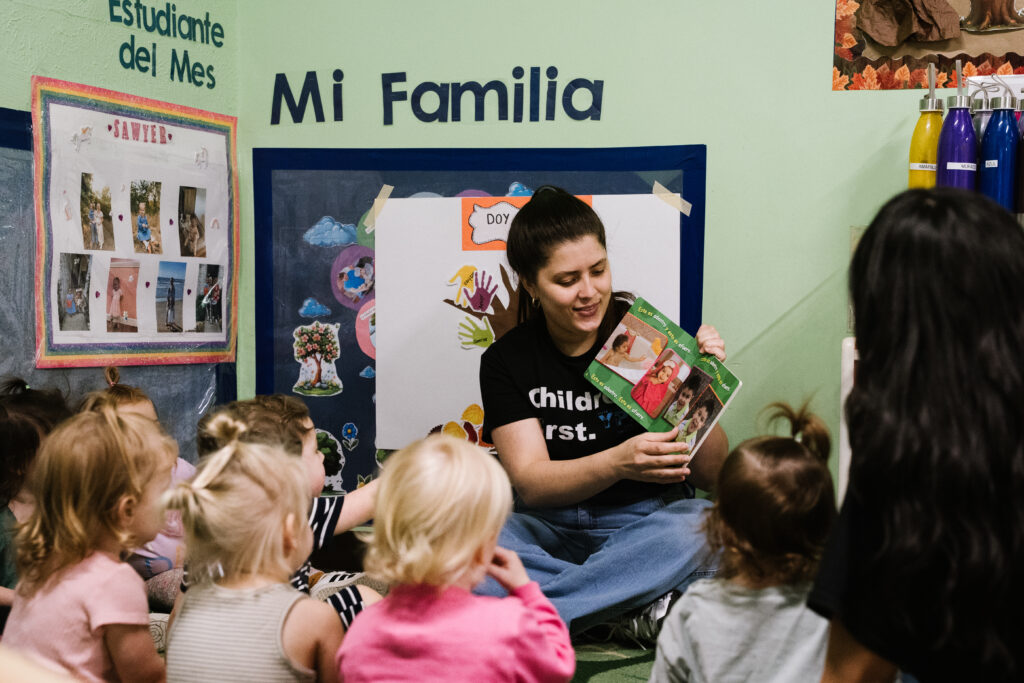
YPW classrooms balance structure with creativity, blending Spanish immersion, hands-on activities, and social-emotional learning. Each environment is carefully crafted to support intellectual, social, and cultural growth—so children thrive in every aspect of development.

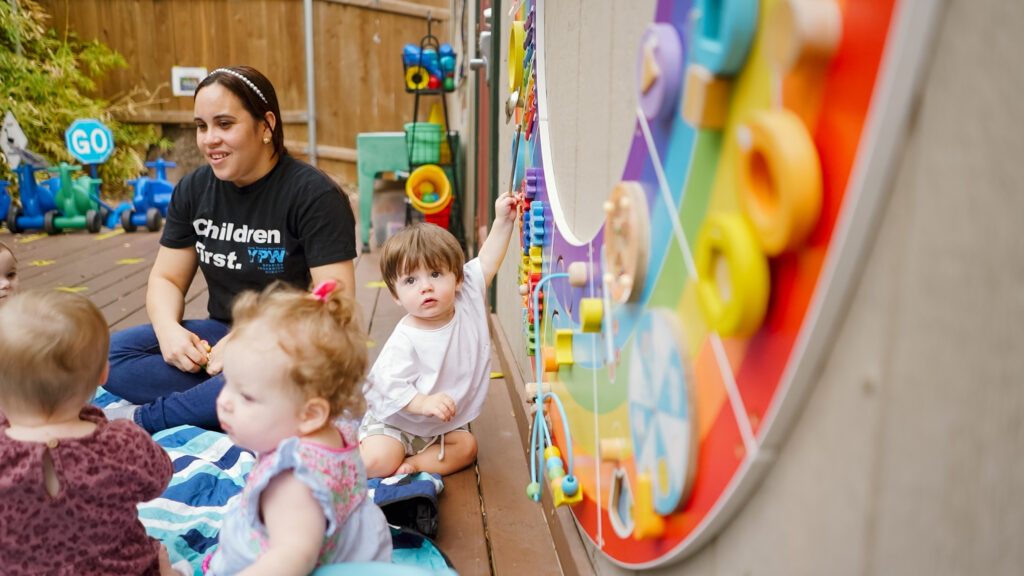
Early Learning

“In our nurturing classrooms, infants, toddlers, and twos begin discovering the world around them—through songs, play, and gentle guidance that makes every day feel like home.”

   BE NURTURED
  • Gentle routines that make little ones feel safe
  • Teachers offering warmth and consistency
  • A home-away-from-home atmosphere
  • Building trust through love and care
  • Exploring textures, sounds, and movement
  • Early discovery through play and wonder
  • Sensory play to strengthen motor skills
  • Songs, stories, and smiles each day
  • Loving bonds with caregivers
  • Early social interactions in a safe space

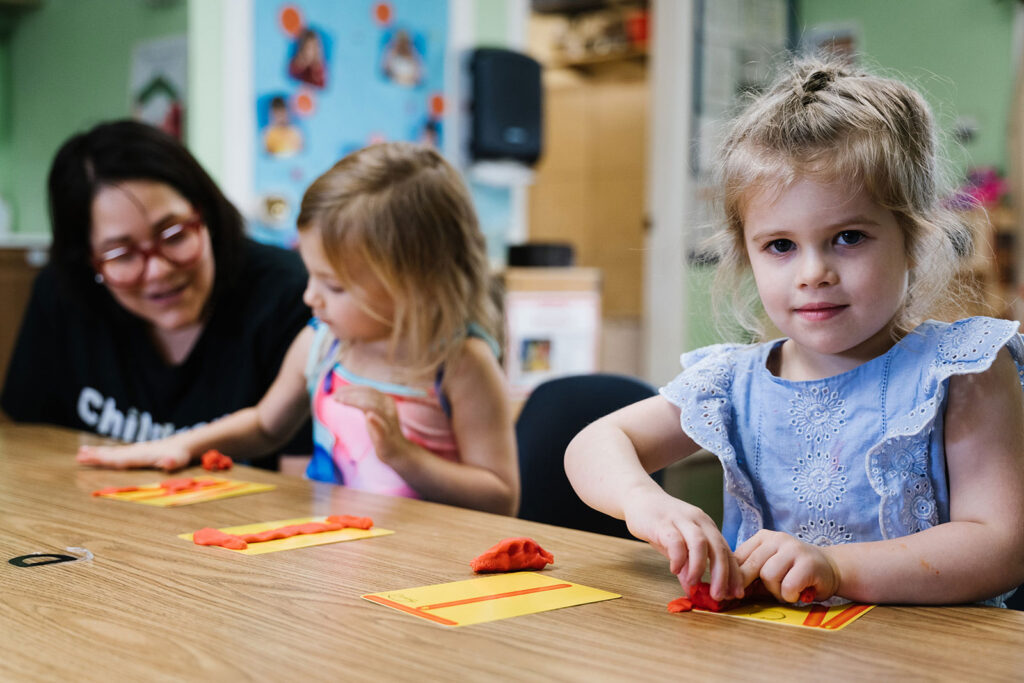
Preschool

“Preschoolers explore with curiosity and creativity. Whether painting, building, or singing, every experience is a chance to grow independence and a love for learning.”

   BE CURIOUS
  • Asking questions and exploring answers
  • Building confidence through discovery
  • Expressing through art, music, and movement
  • Imagining, building, and role-playing
  • Practicing independence every day
  • Celebrating progress and effort
  • Learning to share, listen, and work as a team
  • Building friendships through play
  • Making choices and solving problems
  • Developing self-control and responsibility

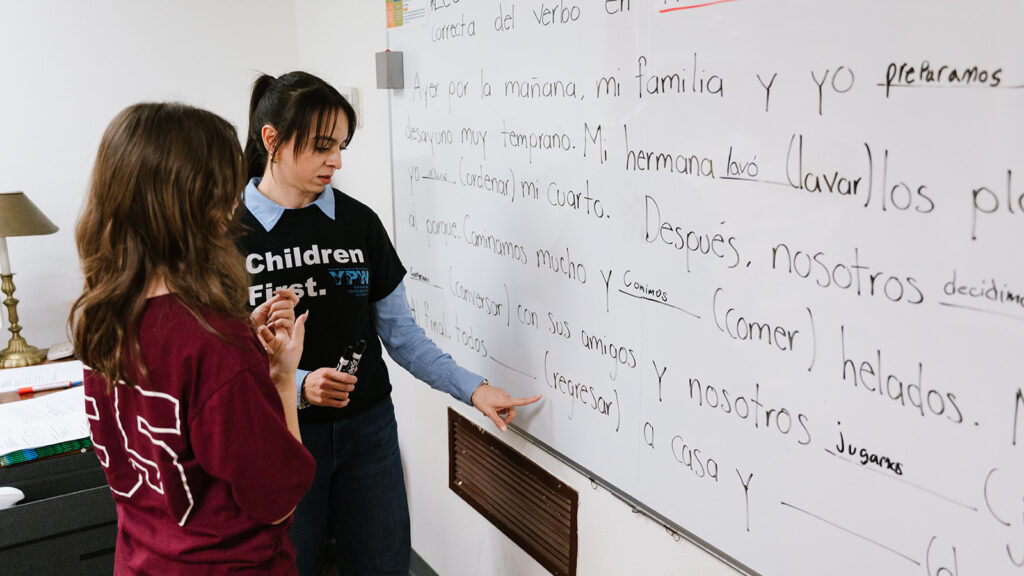
Elementary

(Kinder to 5th Grade)

“Elementary students are immersed in Spanish and inspired to think critically, create boldly, and collaborate with confidence—skills that prepare them for a lifetime of learning.”

   BE INSPIRED
  • Immersed in Spanish and global perspectives
  • Developing a love for lifelong learning
  • Designing, experimenting, and problem-solving
  • Growing through STEAM challenges
  • Building literacy and math fluency
  • Speaking up with ideas and solutions
  • Tackling challenges with perseverance
  • Learning from mistakes and trying again
  • Taking initiative in class and community
  • Respecting others while guiding with kindness

The Whole Child Philosophy Statement

YPW is accredited early education dedicated to nurturing intellectual, social, emotional, and cultural growth through full Spanish immersion. From infants to elementary students — and now after-schoolers, teens, and adults — our programs foster curiosity, creativity, and bilingual confidence for a lifetime of discovery.

Here’s How to Get Started

Step 1

Book a tour of one of our accredited schools

Step 2

Choose a full or part-time schedule that works for your family

Step 3

Watch your child thrive in Spanish and beyond
Why Families Choose YPW

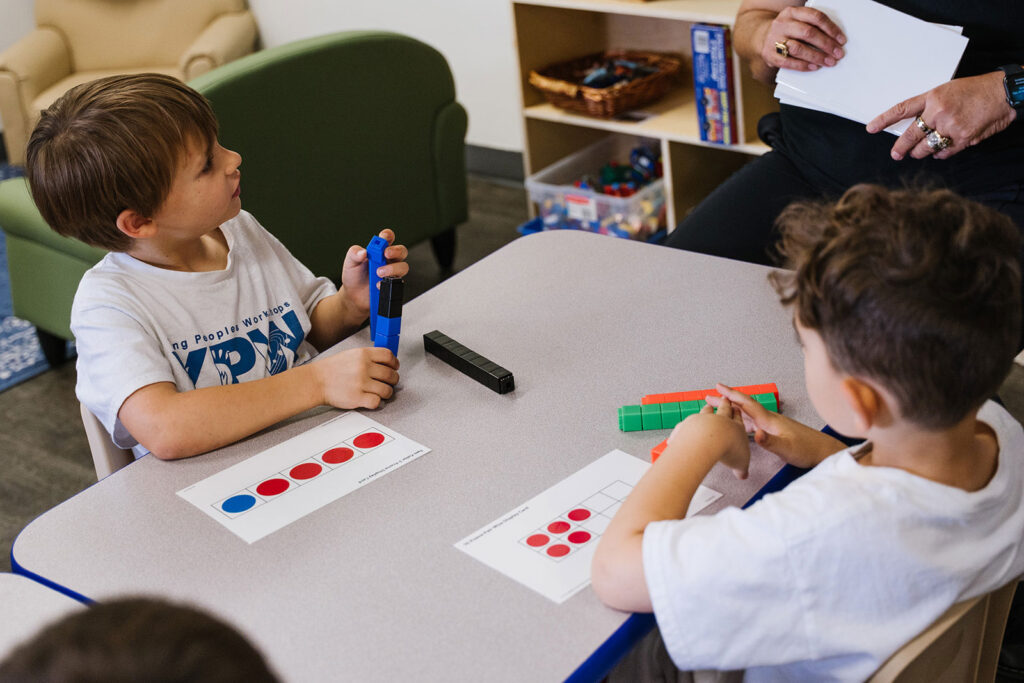
Parents choose YPW for more than academics. They choose us for the warmth of our teachers, the strength of our immersion program, and the confidence their children build as curious, bilingual learners.

Spanish for Everyone

Now enrolling for our fun, intelligent Spanish classes and tutoring for all ages

playtime-1
Mommy & Me Spanish Workshops
boy-1
After-school learning and cultural exploration
youth-1
High school tutoring + AP/SAT Spanish prep
youth (2)
Practical Spanish classes, no matter your skill level

Let us answer your questions

Come in and take a look for yourself

FAQ'S

The current research on this topic shows that this is not the case. In their article, “So You Want Your Child to Learn French”, Weber and Tardif say that “During the first days of school, we carefully observed both the regular and immersion students with some of parents’ most often voiced concerns in mind. However, contrary to our expectations, the second-language element did not really seem to be a major source of frustration or difficulty for the children. The video recordings and interviews clearly show that the children were able to construct much meaning from the immersion situation even at the beginning of the year. Many of the children for example, offered the following explanations of how they came to understand the teacher’s French: ‘I just listen very hard and my brain figures it out,’ ‘I think of a word in English it sounds like,’ and ‘I ask the teacher.’” (pp. 55-60)

In most cases, learning a second language actually enhances a child’s ability with their first language. Children can learn much about English by learning the structure of other languages. Common vocabulary also helps children learn the meaning of new words in English.
Experimental studies have shown that no long-term delay in native English language development occurs between children participating in second language immersion classes and those schooled exclusively in English. It should be noted that full immersion students’ English development may lag temporarily in reading, word knowledge, and spelling while instruction is occurring exclusively in the immersion language. However, after a year or two of instruction in English language arts, this discrepancy disappears (Genesee, 1987).
It is important for parents to understand that this lag is temporary and to be expected. It is assumed that immersion students will have consistent exposure to and support for English at home and in the community. Parents need to provide their children with experiences that will enhance their English language and literacy development. For example, parents should read to their children every day in English and involve them in games and activities that compliment their classroom learning. Research shows that the stronger the development of the native language, the greater the proficiency in the immersion language, so children who enter an immersion program with a strong base in English will succeed more easily than those whose English skills are not as strong.

Research findings on the effectiveness of immersion education hold true for a wide range of students, including those from diverse socioeconomic and ethnic backgrounds (Genesee, 1992).
These programs are not intended exclusively for middle and upper class Anglo families. In fact, some recent research indicates that immersion may be an effective program model for children who speak a language other than English or the immersion language at home (deCourcy, Warren, & Burston, 2002).
It is hypothesized that these learners may benefit from a leveling-of-the-playing-field effect that occurs when all of the students in the class are functioning in a second language. Students who are not native speakers of English are able to be on par withtheir native-English-speaking peers and enjoy the same kinds of success with learning. There are, however, many unanswered questions concerning the suitability of language immersion for children with language-based learning disabilities. Research on this topic is scarce.
Some researchers and immersion practitioners argue that children whose first language acquisition is seriously delayed or who struggle with auditory discrimination skills may be overtaxed in a language immersion program (see review in Genesee, 1992).
Previously identified language-processing challenges should be considered prior to enrolling a child in an immersion program. Still, many children with mild learning disabilities can and do succeed in immersion programs and develop proficiency in a second language with knowledgeable teachers and supportive families. Parents and educators do not need to assume that learning in two languages will overtax these children. In fact, many instructional techniques used in immersion are similar to the techniques recommended for struggling learners.

Young Peoples Workshops

YPW (Young People’s Workshops) is a dynamic learning community where children experience meaningful, “intelligent fun” through bilingual education and enrichment. We offer the following programs:

a. Spanish Immersion School for infants through 5th grade
b. Spanish Afterschool Program
c. Spanish Workshops in Art, Science & Technology, Cooking, Music & Movement
d. Spanish Day Camp (full- and half-day options)
e. Spanish Tutoring and Classes

GRADE LEVEL FAQ'S

YPW can transition students into YPW Elementary starting in any of the elementary years. Often the summer will be a good time to prepare the student with individualized tutoring. The student joins the immersion class and may be pulled out for additional tutoring as needed. Classmates support each other during the transition. Research estimates that midway through the year a new child may understand about 50% of what is being said, but by the end of the year, that figure may be closer to 80%.

Research evidence has not shown a lag in English proficiency in the early elementary years when small class sizes and flexible grouping are used enabling individualized instruction. A recent Rand study on dual language immersion students controlled for income showed that 5th graders outperformed monolingual students by 7 months, and 8th graders outperformed by 9 months – nearly a full year ahead of monolingual peers. Students in immersion develop metalinguistic awareness which is a knowledge of how language works.

Students learning the content in both languages often benefit from hearing the instruction taught in both target language and English. Research shows that students in a dual language/ immersion model meet or exceed the norm for English language arts and math as well as the skills of listening, speaking, reading and writing in the second language as compared to norms.

Our teachers help develop these skills through regular daily practice of math “problem of the day”, or through the analysis of various types of literature. The full immersion experience itself develops cognitive and flexible thinking skills.

Most of our students do not come from households that speak Spanish at home. We do not expect parents to help the child complete the homework. In fact, it is preferable that the parent communicate the issues the child may be having so that the teacher can adjust the lessons to ensure that the material is learned. Homework is a reinforcement of the content taught in class and is a good way for teachers to assess how well the material is understood. Also, by not being able to help, the child is developing the important skills of self-reliance, independence and communication.

Contact Us

Subscribe now and receive newsletter with educational materials, new courses, interesting posts, popular books and much more!